
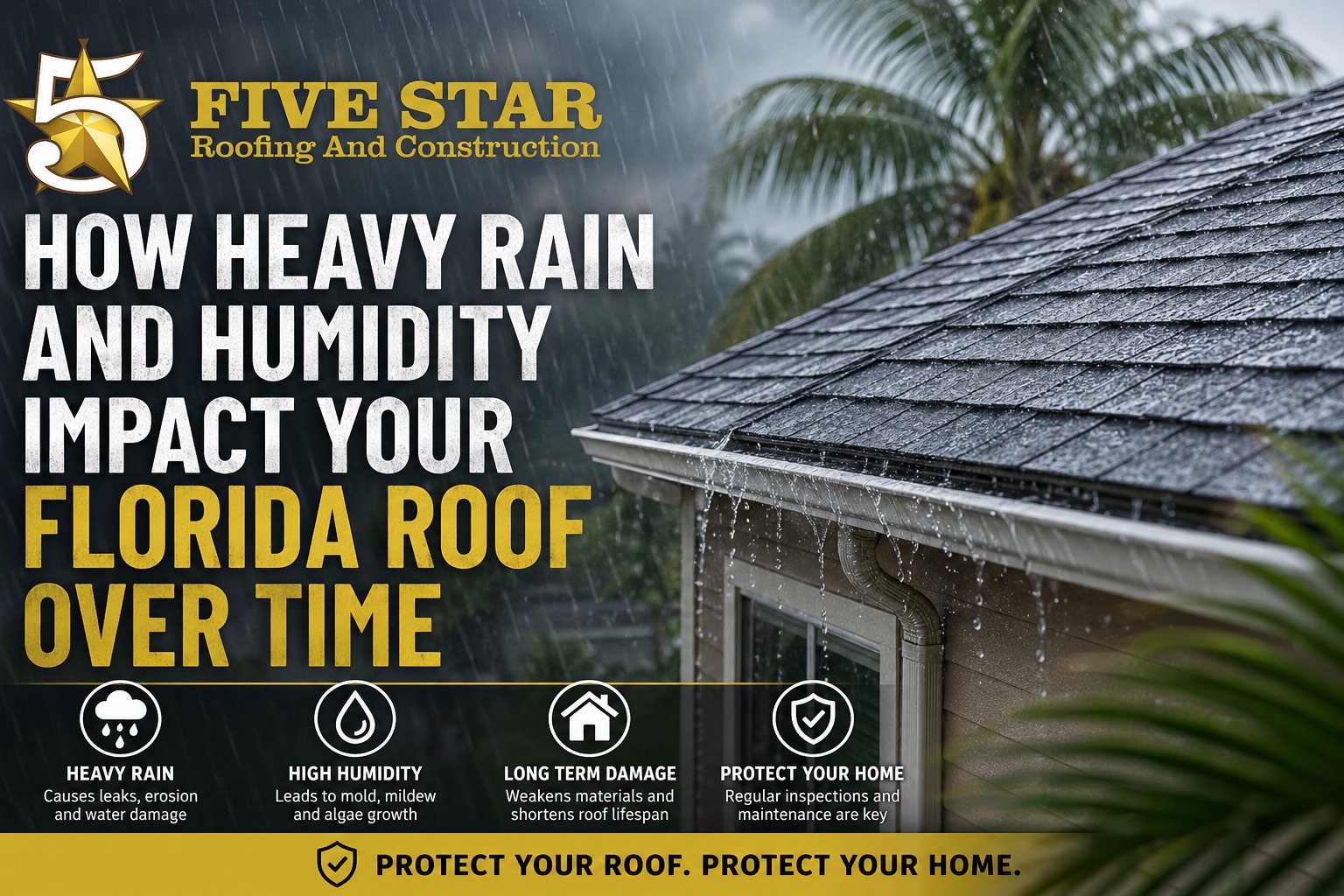
How Heavy Rain and Humidity Impact Your Florida Roof Over Time
How Heavy Rain and Humidity Impact Your Florida Roof Over Time
Florida’s climate is beautiful—but it can be brutal on your roof. Between intense rainfall, constant humidity, and sudden storms, your roofing system is under continuous stress. Over time, these environmental factors can quietly cause damage that leads to costly repairs if not addressed early.
Here’s what Florida homeowners need to know about how heavy rain and humidity impact their roof—and what you can do to protect your investment.
Direct Answer (AEO)
Heavy rain and high humidity in Florida can weaken roofing materials, promote mold and algae growth, and accelerate wear over time. This leads to issues like leaks, rot, and reduced roof lifespan if not properly maintained.
🌧️ How Heavy Rain Affects Your Roof
Florida experiences frequent downpours, especially during the summer and hurricane season. While roofs are designed to handle water, constant exposure can take a toll.
1. Water Intrusion & Leaks
Over time, rain can find its way through:
Cracked or missing shingles
Damaged flashing
Worn sealants
Even small vulnerabilities can allow water to seep into your attic or underlayment, leading to hidden damage.
2. Erosion of Roofing Materials
Heavy rain can gradually wear down roofing materials, especially on:
Asphalt shingles (granule loss)
Flat roofs (membrane wear)
This erosion reduces your roof’s ability to repel water effectively.
3. Gutter Overflow & Drainage Issues
When gutters are clogged or undersized, heavy rain can:
Cause water to pool on the roof
Lead to fascia and soffit damage
Increase the risk of leaks near the roofline
💧 The Hidden Impact of Florida Humidity
Humidity is a year-round issue in Florida—and it can be just as damaging as rain.
1. Mold, Mildew & Algae Growth
High moisture levels create the perfect environment for:
Black streaks (algae)
Mold and mildew buildup
Roof discoloration
Beyond aesthetics, these growths can degrade roofing materials over time.
2. Wood Rot & Structural Damage
If moisture becomes trapped in your roofing system, it can lead to:
Rotting decking
Weak structural support
Increased risk of roof failure
3. Reduced Roof Lifespan
Constant humidity accelerates aging, especially for:
Shingles
Underlayment
Sealants and adhesives
What should last 20–30 years may wear out much sooner without proper care.
⚠️ Combined Effects: Rain + Humidity = Faster Damage
When heavy rain and humidity work together, the impact multiplies:
Water enters small gaps during storms
Humidity prevents proper drying
Moisture gets trapped inside the roofing system
This cycle can quickly lead to:
Persistent leaks
Interior water damage
Higher repair costs
🛠️ How to Protect Your Roof in Florida
Proactive maintenance is key to extending the life of your roof.
✔️ Schedule Regular Roof Inspections
Have your roof inspected at least once a year—and after major storms.
✔️ Keep Gutters Clean
Ensure proper drainage to prevent water buildup and overflow.
✔️ Address Small Repairs Early
Fixing minor issues now can prevent major damage later.
✔️ Consider Algae-Resistant Materials
Modern roofing materials can better withstand Florida’s humid climate.
✔️ Ensure Proper Ventilation
Good attic ventilation helps reduce moisture buildup and heat retention.
🏠 Protect Your Investment with Five Star Roofing and Construction
Florida weather doesn’t take a break—and neither should your roof maintenance. At Five Star Roofing and Construction, we specialize in protecting homes from the unique challenges of heavy rain and humidity.
Whether you need an inspection, repair, or full roof replacement, our team is here to help keep your home safe, dry, and protected year-round.
❓ Frequently Asked Questions
1. How often should I have my roof inspected in Florida?
At least once a year, plus after any major storm or hurricane. Regular inspections help catch issues early before they become expensive problems.
2. Can humidity really damage my roof even without rain?
Yes. High humidity can lead to mold, mildew, and material breakdown over time, even without direct rainfall.
3. What are the signs of moisture damage on a roof?
Look for water stains on ceilings, mold growth, musty odors, warped shingles, or sagging areas in the roof.
4. Are certain roofing materials better for Florida’s climate?
Yes. Metal roofs, tile roofs, and algae-resistant shingles tend to perform better in humid and rainy environments.
5. How can I prevent algae from growing on my roof?
Regular cleaning, proper ventilation, and installing algae-resistant shingles can help reduce or prevent growth.
Five Star Roofing & Construction is your experienced Roofers Near Me, offering Free Roof Inspections and Tampa Roofing Contractors throughout Tampa Bay, Pinellas County, Clearwater, Tampa, and Orlando for over 20 years. We are a Licensed, Bonded, and Insured Florida Contractor and happily offer Free Roof Repair Inspections and Roof Assessments.
This content is for general reading purposes only and is not intended as legal or professional advice.